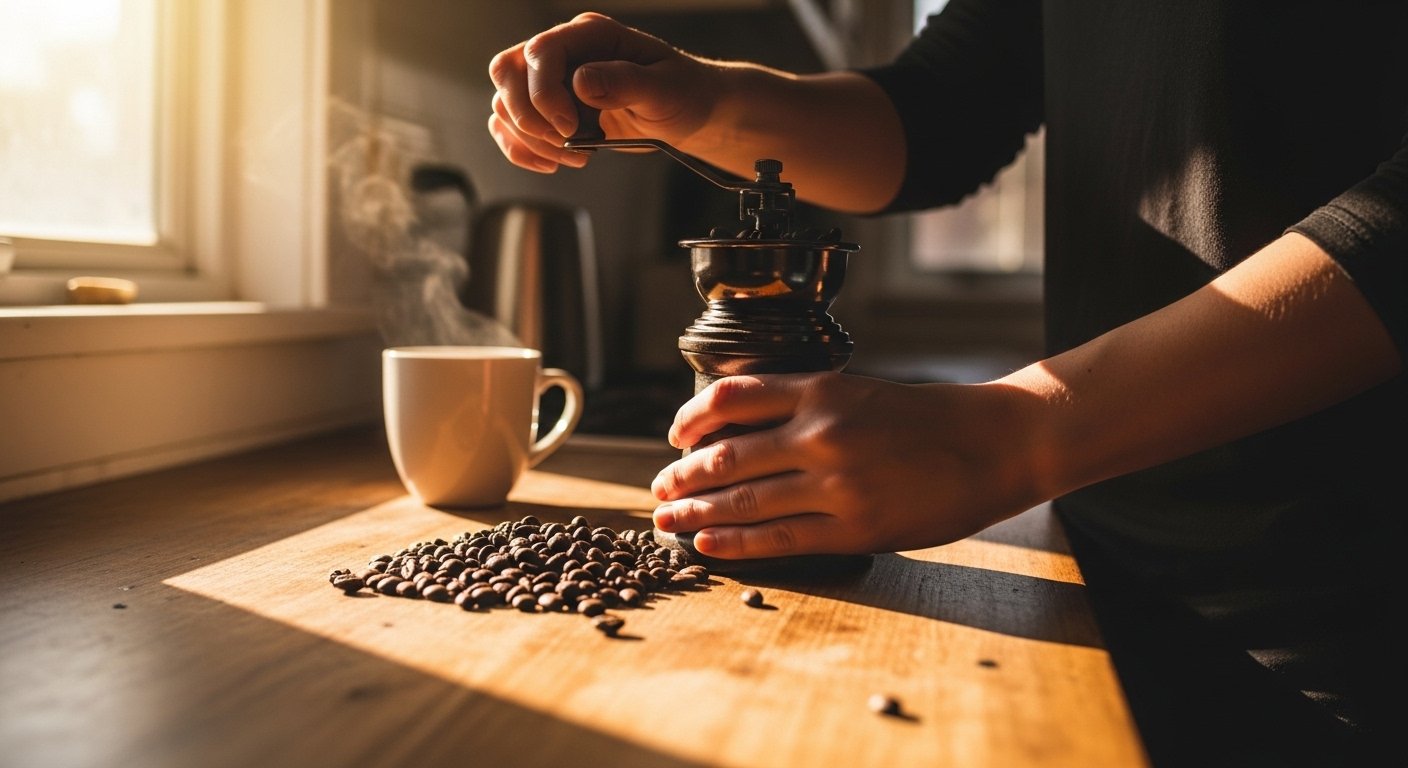
You probably searched how to use a coffee grinder because something just felt… off, right? Maybe your coffee tasted kinda bitter one day, then weirdly sour the next, and you’re just standing there like “what am I even doing with this thing.” Yeah, that. It happens more than people admit.
Grinding coffee isn’t complicated, but it’s also not as “just press button” as it looks. There’s a tiny bit of rhythm to it, a bit of instinct too, and once you get it, you’ll wonder why your coffee ever tasted meh in the first place.
Let’s figure it out properly—but not in that robotic, instruction-manual way.
Why Your Coffee Grinder Actually Matters More Than You Think
Okay so here’s the thing, the grinder is kinda the unsung hero. People obsess over beans (which is fair), or fancy machines, but then use the grinder like it’s just a step to get over with quickly. That’s where things go sideways.
Coffee extraction depends on surface area. Sounds science-y, but basically:
- Finer grind → more surface area → faster extraction
- Coarser grind → less surface area → slower extraction
If your grind size is wrong, your coffee gets either:
- Over-extracted (bitter, harsh, almost burnt-ish)
- Under-extracted (sour, thin, kinda disappointing)
A study from the Specialty Coffee Association notes that grind consistency directly affects extraction yield, which is just a fancy way of saying “your grinder can ruin or rescue your coffee.”
So yeah, it matters. A lot.
Types of Coffee Grinders (And Why Yours Behaves Weird Sometimes)
Before you even think about how to use a coffee grinder properly, you gotta know what type you’re dealing with.
1. Blade Grinder
These are the loud little chaos machines.
- Uses spinning blades
- Chops beans unevenly
- Cheap, widely available
Problem is, you don’t really “set” a grind size. You just hold the button and hope for the best, which… isn’t ideal.
2. Burr Grinder
This is where things get serious-ish.
- Uses two burrs (flat or conical)
- Crushes beans evenly
- Adjustable grind settings
These are what coffee people (you know the type) always recommend, and honestly, they’re not wrong.
Quick Comparison Table
| Feature | Blade Grinder | Burr Grinder |
|---|---|---|
| Consistency | Low | High |
| Control | Manual guessing | Precise settings |
| Price | Cheap | Moderate–High |
| Taste Quality | Unpredictable | Much better |
If your coffee tastes random every day, there’s a decent chance your grinder is part of the problem.
How to Use a Coffee Grinder Step by Step (But Not Boring)
Alright, let’s actually get into it. Not the robotic steps, but the way you’d actually do it in your kitchen.
Step 1: Measure Your Beans (Don’t Eyeball It Too Much)
I know, I know, you’ve probably just been pouring beans straight in. We all do that at first.
But try this:
- Use about 1–2 tablespoons per cup of coffee
- Or roughly 15–18 grams per cup
It doesn’t have to be perfect, just… not wildly inconsistent.
Step 2: Choose the Right Grind Size (This Is Where People Mess Up)
Different brewing methods need different grind sizes. This part trips up almost everyone at first.
General Guide:
- Coarse → French press
- Medium → Drip coffee maker
- Fine → Espresso
- Extra fine → Turkish coffee
If you’re unsure, medium is a safe starting point. Not perfect, but not terrible either.
Step 3: Grinding (Don’t Rush It Weirdly)
If you’re using a burr grinder:
- Set the grind size
- Add beans
- Let it run till done
If it’s a blade grinder:
- Use short pulses instead of holding the button down
- Shake it slightly between pulses
Why? Because blade grinders heat up and create uneven bits otherwise, which messes with flavor in a sneaky way.
Step 4: Use the Grounds Immediately (Seriously, Don’t Wait)
Coffee starts losing aroma pretty fast after grinding. Like… within minutes.
That fresh smell? That’s flavor escaping.
So ideally:
- Grind → brew immediately
- Don’t grind in bulk for the week (tempting, but nah)
Grind Size Cheat Sheet (Save This in Your Brain Somewhere)
Here’s a simple breakdown you’ll actually use:
- French Press: Coarse, like sea salt
- Pour Over: Medium-coarse, like rough sand
- Drip Machine: Medium, like regular sand
- Espresso: Fine, like sugar
- Turkish: Powdery, almost flour-like
If your coffee tastes off, adjusting grind size is the first thing to tweak, not the beans.
Common Mistakes When Using a Coffee Grinder
You’re probably doing at least one of these. No judgement.
1. Grinding Too Much at Once
Freshness drops fast. Grinding for “later” sounds efficient, but it’s not doing your coffee any favors.
2. Not Cleaning the Grinder
Old coffee oils build up. They go stale. Then your fresh beans taste… not fresh.
Clean it every couple of weeks at least. More if you’re using it daily.
3. Using the Wrong Grind Size
This is the big one. If your coffee tastes:
- Bitter → grind is too fine
- Sour → grind is too coarse
Adjust and try again. It’s kinda trial-and-error, and that’s normal.
4. Overfilling the Grinder
This one’s subtle. If you overload it, especially a blade grinder, the beans don’t grind evenly.
Less is more here.
Manual vs Electric Coffee Grinder: Which One Feels Better to Use?
This is less about “better” and more about what suits your vibe.
Manual Grinder
- Quiet
- Slower
- Kinda satisfying in a weird way
Good for small batches, or if you enjoy the process.
Electric Grinder
- Fast
- Convenient
- Less effort
Better if you’re half-asleep in the morning and just need coffee now.
Honestly, both work. Don’t overthink this part too much.
How Grind Size Affects Taste (This Is Where It Clicks)
Let’s make this super real.
Imagine two cups:
- Cup A: finely ground coffee used in a French press
- Cup B: coarsely ground coffee used in espresso
Both are wrong setups.
Cup A will be bitter and muddy. Cup B will be weak and sour.
That’s because extraction time and grind size need to match. It’s like cooking pasta—too long or too short, and it’s just… off.
A Few Weird-but-Helpful Tips Nobody Mentions Enough
These are the small things that quietly make a difference.
Shake Your Grinder (Gently)
Especially blade grinders. Helps redistribute beans for a more even grind.
Don’t Store Beans in the Grinder
Seems convenient, but exposure to air ruins them faster.
Listen to the Sound
This sounds odd, but experienced coffee folks actually do this.
- Loud, sharp noise → whole beans still grinding
- Softer, consistent sound → almost done
You start noticing it after a while.
Use Fresh Beans (Yeah, It Matters More Than You Think)
Even the best grinder can’t fix stale beans. If your coffee tastes flat no matter what, this might be why.
What Experts Say (And Why It’s Actually Useful)
James Hoffmann, a well-known coffee expert, once said something along the lines of consistency being more important than perfection.
That’s kinda reassuring, right?
You don’t need:
- The most expensive grinder
- Perfect measurements
- Fancy techniques
You just need to be consistent with what you’re doing.
Troubleshooting Your Coffee (Quick Fix Guide)
If things still feel off, here’s a quick cheat sheet:
- Too bitter?
Try a coarser grind or shorter brew time - Too sour?
Go finer or increase brew time - Weak coffee?
Use more grounds or grind finer - Too strong?
Use fewer grounds or grind coarser
It’s all connected. Tiny changes make noticeable differences.
Final Thoughts (The Part Where It All Settles In)
Learning how to use a coffee grinder isn’t really about memorizing steps, it’s more like getting used to how your coffee behaves. You adjust a little, taste, adjust again, and eventually it just… clicks.
And yeah, your first few attempts might be inconsistent. That’s normal. Everyone goes through that slightly frustrating phase where nothing tastes quite right.
But once you dial it in—even roughly—you’ll start noticing the difference immediately. Coffee becomes less of a routine and more of a small, oddly satisfying ritual.
If your coffee has been disappointing lately, chances are it’s not the beans. It’s probably just the grind needing a bit of attention.

James Wilson is a seasoned product review specialist with a strong focus on coffee grinders and home brewing equipment. With years of hands-on experience testing both manual and electric grinders, he brings practical insights and honest recommendations to help readers make informed decisions. James is passionate about the role grind quality plays in achieving the perfect cup of coffee, and he combines technical knowledge with a user-friendly approach. His reviews are known for their clarity, depth, and reliability, making him a trusted voice for coffee enthusiasts looking to upgrade their daily brewing experience.