The difference between a comfortable stride and chronic pain often boils down to subtle alignment. Most generic inserts fail because they treat every foot as a static block rather than a kinetic chain.
Choosing the Best Insoles for Underpronation requires finding a balance between rigid correction and necessary cushion. A shoe insole should act like a trusted foundation for a house, keeping everything above it level. These top-rated picks help you regain your natural gait.
Key Takeaways
- Prioritize a deep heel cup to keep your foot centered and prevent the lateral rolling common in underpronation.
- Check for medial or lateral wedge options that specifically address how your foot strikes the ground.
- Look for orthopedic-grade materials like dense gel or foam that retain their shape throughout the work day.
- Ensure the arch support profile matches your specific foot type to avoid unnecessary pressure points.
- Verify the sizing and adjustability to guarantee the wedge thickness is appropriate for your particular degree of supination.
| Ultimate Structural Customization |  |
Adjustable 3-Layer Heel Wedge Insoles | Fully adjustable height | Easy to wash | Fits most shoes | View on Amazon | Read Review |
| Secure Alignment Anchor |  |
Self-Adhesive Lateral Heel Wedge Inserts | Adhesive stays put | Corrects ankle alignment | Slim heel profile | View on Amazon | Read Review |
| Versatile All-Day Comfort |  |
Customizable Soft Orthotic Insoles | Soft, comfortable materials | Full-length support | Multi-activity usage | View on Amazon | Read Review |
| Heavy Duty Correction |  |
PowerStep Pinnacle Maxx Stability Insoles | Firm, durable construction | Maximum stability | Angled heel design | View on Amazon | Read Review |
| Elite Athlete Support | 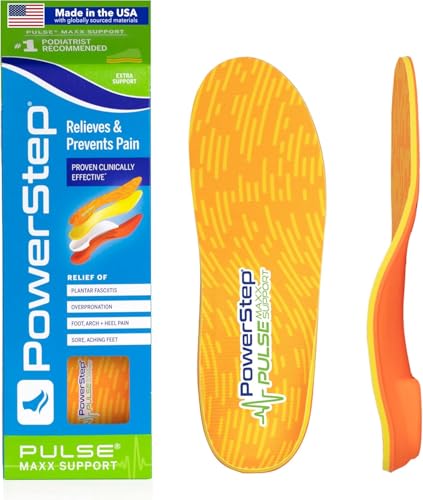 |
PowerStep Pulse Maxx Running Insoles | High-impact cushioning | Ankle support | Optimized for running | View on Amazon | Read Review |
| Simple Wedge Utility |  |
BIGGCOOL Two-Layer Corrective Insoles | Two-layer adjustment | Corrects bow legs | Easy to use | View on Amazon | Read Review |
| Accessible Alignment Relief |  |
Dr. Scholl’s Stability Support Insoles | Immediately improves alignment | Cradles the foot | Reduces body stress | View on Amazon | Read Review |
| Flat Foot Specialist |  |
PowerStep Pinnacle Low Insoles | Ideal for flat feet | All-day comfort | Strong arch support | View on Amazon | Read Review |
| Targeted Feminine Ergonomics |  |
PowerStep Pinnacle Pink Orthotics | Deep heel cup | Maximum cushioning | Ergonomic design | View on Amazon | Read Review |
| Comprehensive Shock Absorption |  |
Spenco Total Support Max Insoles | Advanced shock absorption | Deep heel cupping | Contours to feet | View on Amazon | Read Review |
More Details on Our Top Picks
-
Adjustable 3-Layer Heel Wedge Insoles
If you struggle with supination, these inserts act like a fine-tuned wrench for your gait. The three-layer design allows you to peel back or add sections to find the exact height your ankle requires for proper alignment.
Because they are washable and reusable, you can move them between your work boots and sneakers. Just keep in mind that these are strictly heel-focused, so they won't provide the full-length arch support found in traditional orthotics.
- Product Type:Heel wedge inserts
- Design Focus:Supination correction
- Target Condition:Underpronation and flat feet
- Additional Feature:Three stackable layers
- Additional Feature:Unisex design
- Additional Feature:Durable gel construction
-
Self-Adhesive Lateral Heel Wedge Inserts
These wedges prioritize stability by using a self-adhesive backing to stay exactly where you place them. They are a reliable choice if you find that standard inserts slide around inside your dress shoes or formal footwear.
They excel at correcting bow legs and general ankle misalignment. Since they focus specifically on the heel, they are best suited for users who only need minor adjustments to their step rather than full arch correction.
- Product Type:Heel wedge inserts
- Design Focus:Foot alignment
- Size Range:Medium to Large
- Target Condition:Bow legs and pain
- Additional Feature:Lateral and medial support
- Additional Feature:Simple peel-and-stick install
- Additional Feature:Low-profile design
-
Customizable Soft Orthotic Insoles
For those who want a blend of support and cushion, these insoles offer a soft landing for every stride. They provide a more comprehensive feel than a simple heel wedge, cradling the arch while addressing supination issues.
The customizable nature makes them a strong pick for hikers or professionals on their feet all day. Be aware that the extra cushioning takes up more space, so they work best in shoes with removable factory liners.
- Product Type:Full-length orthotic
- Design Focus:Arch and heel support
- Target Condition:Plantar fasciitis and supination
- Additional Feature:Metatarsal relief
- Additional Feature:Customizable fit
- Additional Feature:Shock-absorbing base
-
PowerStep Pinnacle Maxx Stability Insoles
When you need serious control, the firm, angled heel of this insole provides a solid foundation. It is built for people who put their gear through rigorous daily wear and need something that won't lose its shape after a few weeks.
This is a high-stability option that effectively forces the foot into a neutral position. Because the build is quite rigid, expect a brief adjustment period as your feet get used to the aggressive arch architecture.
- Brand Name:PowerStep
- Product Type:Orthotic insole
- Design Focus:Maximum stability
- Target Condition:Overpronation and flat feet
- Additional Feature:Made in USA
- Additional Feature:Deep heel cradle
- Additional Feature:Firm arch reinforcement
-
PowerStep Pulse Maxx Running Insoles
Runners often face the most strain, and these inserts are designed to absorb impact while keeping your ankles aligned. The focused support helps prevent the fatigue that typically sets in during long-distance training sessions.
These are contoured specifically for the demands of high-intensity movement. They are stiffer than standard foam inserts, which is great for performance but might feel too intense for casual walking.
- Brand Name:PowerStep
- Product Type:Running orthotic
- Design Focus:Pain relief
- Target Condition:Overpronation
- Additional Feature:Made in USA
- Additional Feature:Contoured arch shape
- Additional Feature:Specialized foam blend
-
BIGGCOOL Two-Layer Corrective Insoles
These inserts offer a straightforward approach to correcting gait imbalances through a simple, two-layer system. They function as a dependable bridge between flat shoes and proper orthopedic alignment, helping to ease knee pain caused by incorrect pressure distribution.
You can easily adjust the thickness to suit your footwear. However, they lack the full-foot cushioning found in more expensive models, so they are best used as a targeted correction tool.
- Brand Name:BIGGCOOL
- Product Type:Heel wedge
- Design Focus:Foot alignment
- Target Condition:Supination and knee pain
- Additional Feature:Medial support
- Additional Feature:Lateral support
- Additional Feature:Durable rubberized material
-
Dr. Scholl’s Stability Support Insoles
If you need immediate relief for fallen arches, this is a highly approachable solution. These insoles are designed to cradle the foot and take the pressure off your lower body without requiring a custom orthotic fitting.
They effectively improve alignment for those with minor pronation issues. Because they prioritize comfort, they are slightly less rigid than clinical-grade inserts, making them ideal for everyday casual wear.
- Brand Name:Dr. Scholl’s
- Product Type:Stability insole
- Size Range:Women's 6-10
- Target Condition:Fallen arches
- Additional Feature:Arch-focused design
- Additional Feature:Low-profile fit
- Additional Feature:Stress reduction technology
-
PowerStep Pinnacle Low Insoles
These are built specifically for people with low or flat arches who need targeted pain relief. The structure provides enough support to keep the foot from rolling incorrectly, which is vital for preventing long-term discomfort.
The comfort level is consistent for all-day use, whether you are at the office or home. Keep in mind that these are low-profile by design, so they might not provide the high arch boost that some users find necessary.
- Brand Name:PowerStep
- Product Type:Orthotic insole
- Design Focus:Low arch support
- Target Condition:Plantar fasciitis
- Additional Feature:Made in USA
- Additional Feature:Heel pain relief
- Additional Feature:Consistent cushioning
-
PowerStep Pinnacle Pink Orthotics
Designed with a focus on women's foot anatomy, these inserts provide a deep heel cup that keeps your foot securely in place. They are excellent for managing pronation while maintaining a soft, cushioned feel inside your favorite shoes.
The high level of arch support is particularly helpful for those suffering from chronic foot fatigue. They are a reliable, durable option that maintains its shape even after months of consistent use.
- Brand Name:PowerStep
- Product Type:Orthotic insole
- Design Focus:Arch support
- Target Condition:Pronation
- Additional Feature:Made in USA
- Additional Feature:Soft top cover
- Additional Feature:Shock-absorbing base
-
Spenco Total Support Max Insoles
These insoles act like a high-tech shield for your feet, combining arch support with advanced shock absorption. The deep heel cupping is particularly effective at keeping your foot aligned throughout every phase of your stride.
They conform to your specific foot contours over time, offering a personalized fit that few other inserts can match. Be aware that the supportive structure is quite firm, so they are best suited for those who truly need that extra level of orthopedic correction.
- Brand Name:Spenco
- Product Type:Orthotic insole
- Design Focus:Metatarsal support
- Target Condition:Over-pronation
- Additional Feature:FSA and HSA eligible
- Additional Feature:High-level arch support
- Additional Feature:Durable construction
Frequently Asked Questions
How do I know if I have underpronation?
Look at the soles of your old shoes. If the outer edge shows significantly more wear than the rest of the tread, you are likely supinating. You might also notice frequent ankle rolls or persistent pain along the outside of your foot.
Can I use these insoles in any shoe?
Most insoles work in athletic shoes with removable factory liners. If your shoe has a glued-in footbed, you may need to choose a thinner model. Always remove the original insole first to ensure a proper fit and prevent your foot from sitting too high.
Will these insoles fix my foot pain immediately?
Your feet need time to adjust to a new mechanical alignment. Start by wearing them for just a few hours each day during the first week. Think of this like breaking in a new pair of boots; gradual use prevents soreness and muscle strain.
Do I need custom orthotics instead?
Custom orthotics are necessary if you have severe structural deformities or chronic, debilitating pain. However, most people find relief with high-quality, over-the-counter insoles designed for supination. Start with a premium off-the-shelf option to see if it meets your needs.
How often should I replace these insoles?
Even the best materials lose their supportive bounce over time. Plan to replace your insoles every six to twelve months, depending on your activity level. If the foam begins to compress permanently or the arch support flattens, it is time for a new set.

James Wilson is a seasoned product review specialist with a strong focus on coffee grinders and home brewing equipment. With years of hands-on experience testing both manual and electric grinders, he brings practical insights and honest recommendations to help readers make informed decisions. James is passionate about the role grind quality plays in achieving the perfect cup of coffee, and he combines technical knowledge with a user-friendly approach. His reviews are known for their clarity, depth, and reliability, making him a trusted voice for coffee enthusiasts looking to upgrade their daily brewing experience.