
You probably didn’t wake up thinking about how to clean cuisinart coffee grinder parts, but here you are, staring at that slightly oily, kinda dusty grinder wondering if it’s supposed to look like that or if you’ve just been ignoring it too long. Yeah, same thing happens to most people, no big deal, but also… yeah, it needs cleaning.
If your coffee’s tasting a bit off lately—like dull, or weirdly bitter in a way that feels… suspicious—it’s usually not the beans. It’s the grinder. Old coffee oils cling in there like they pay rent, and they do not leave on their own.
Let’s fix that.
Why Cleaning Your Cuisinart Grinder Actually Matters (more than you think)
So here’s the thing—coffee grinders, especially from brands like Cuisinart, aren’t just mechanical tools. They’re basically flavor storage devices, and not always in a good way.
When you grind coffee, oils and fine particles stick inside. Over time:
- Oils go rancid (yeah… gross but true)
- Old grounds mix with fresh ones
- Your grind consistency gets weird
- The motor works harder than it should
And suddenly your morning coffee tastes like it’s having a bad day too.
According to the National Coffee Association, freshness and grind quality are two of the biggest factors in coffee taste. So if your grinder’s dirty, you’re kinda sabotaging yourself a bit.
Types of Cuisinart Coffee Grinders (because cleaning depends on it)
Before you start scrubbing anything like a maniac, you gotta know what type you’re dealing with.
Blade Grinders
These are the simpler ones—spinny blades that chop beans.
- Easier to clean
- Less precise grind
- Usually cheaper
Burr Grinders
These are more serious. They crush beans between burrs.
- Better grind consistency
- More parts (so yeah, more cleaning effort)
- Needs a bit more care
If you’re unsure, just look inside. Blade = obvious spinning knife thing. Burr = looks like gears or rings.
How to Clean Cuisinart Coffee Grinder (Step-by-Step)
Alright, this is the part you came for. Let’s keep it simple, but not too simple.
Step 1: Unplug It (please don’t skip this)
I know it sounds obvious, but people forget. And a spinning grinder is not where you wanna test your reflexes.
Just unplug it. Done.
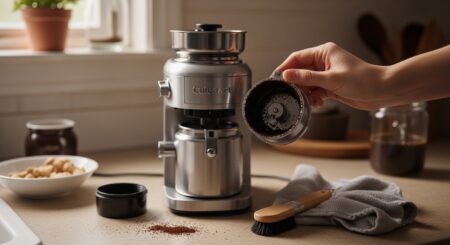
Step 2: Remove Loose Grounds
Turn the grinder upside down and gently tap it over a sink or trash.
You’ll be surprised how much old coffee falls out. Or maybe not surprised, just mildly concerned.
You can also use:
- A soft brush (like a pastry brush or toothbrush)
- A dry cloth
Avoid water at this stage.
Step 3: Clean the Removable Parts
If your model allows it (most Cuisinart grinders do), take out:
- Bean hopper
- Grind chamber
- Lid
Wash them with:
- Warm water
- Mild dish soap
Let them dry completely. And I mean completely. Moisture + coffee = weird clumping mess.
Step 4: Clean the Burrs or Blades
This part’s a little more delicate.
For Blade Grinders:
- Wipe blades with a dry cloth
- Use a brush to remove stuck bits
For Burr Grinders:
- Use a brush to clean between burrs
- Avoid water unless manual says it’s okay (usually it’s not)
If it feels like you’re not getting everything, don’t panic. There’s another trick.
Step 5: Use Grinder Cleaning Tablets (or rice… kinda)
You can buy grinder cleaning tablets, which are designed to absorb oils and clear residue.
Or, the old-school method:
- Add 1–2 tablespoons of uncooked white rice
- Grind it
- Dump it out
It helps scrub internal oils. Not perfect, but better than nothing.
Some people say rice is risky for burr grinders, and yeah, that’s slightly true if you overdo it. Just don’t make it a daily habit.
Step 6: Wipe the Exterior
You’ve probably ignored this part, no judgment.
Use a damp cloth to wipe:
- Buttons
- Base
- Outside surfaces
It’s mostly cosmetic, but it feels good after.
How Often Should You Clean It?
This depends on how much coffee you drink (be honest here).
| Usage Level | Cleaning Frequency |
|---|---|
| Daily use | Every 1–2 weeks |
| Moderate use | Every 2–3 weeks |
| Occasional | Once a month |
Deep cleaning (with tablets or rice) should be done maybe once a month or so.
If your coffee starts tasting off, that’s your signal. Don’t wait longer than that, really.
Signs Your Grinder Needs Cleaning (you probably noticed already)
Sometimes it’s not obvious until it really is.
Watch for:
- Coffee tasting stale or bitter
- Uneven grind size
- Grinder making louder noise than usual
- Oily residue visible inside
If you’re nodding at two or more of these… yeah, it’s time.
Mistakes People Make When Cleaning Cuisinart Coffee Grinders
You’d think cleaning is straightforward, but people manage to mess it up in surprisingly creative ways.
Using Water Inside the Grinder
Don’t do that. Just don’t.
Water can:
- Damage internal parts
- Cause rust
- Ruin the motor over time
Only clean removable parts with water.
Not Drying Parts Properly
This one’s sneaky.
Even a little moisture can:
- Make grounds stick
- Affect grind quality
- Lead to mold (rare, but still)
Let everything air dry fully.
Overusing Rice
Rice is helpful, but not a miracle.
Too much rice grinding can:
- Wear down burrs
- Stress the motor
Use it occasionally, not like a weekly ritual.
Ignoring the Hopper
People clean the inside but forget the hopper.
Old beans leave oils behind there too, and those oils transfer to fresh beans. It’s a cycle you don’t want.
Pro Tips That Make Cleaning Easier (and less annoying)
Here’s where things get a bit smarter.
- Keep a small brush near your grinder so you don’t procrastinate
- Clean right after grinding, when residue is fresh
- Store grinder in a dry place (humidity is not your friend here)
- Use high-quality beans—they leave less oily mess sometimes
Also, weird tip but it works: if you clean it regularly, it takes like 2 minutes. If you wait too long, it becomes a whole project you’ll keep delaying.
Does Cleaning Really Improve Coffee Taste?
Short answer: yes.
Longer answer: absolutely yes, and more than you expect.
Coffee oils oxidize over time. When you mix fresh grounds with old residue, you’re basically brewing a combination of fresh and stale flavors.
That’s why after cleaning, people often say:
“Wait… my coffee tastes brighter?”
That’s not your imagination. That’s just what coffee is supposed to taste like.
Deep Cleaning vs Regular Cleaning
There’s a difference, and it matters.
Regular Cleaning:
- Brushing out grounds
- Wiping surfaces
- Quick maintenance
Deep Cleaning:
- Disassembling parts
- Using tablets or rice
- Thorough oil removal
You need both. Think of regular cleaning as brushing your teeth, and deep cleaning as going to the dentist (but less painful, hopefully).
Final Thoughts (you’ll probably thank yourself later)
Cleaning your grinder isn’t one of those things people get excited about, let’s be real. It’s not fun, it’s not aesthetic, and no one’s posting about it. But once you actually do it, and then make coffee right after… yeah, you notice.
And then you kinda wish you’d done it sooner.
So if you came here wondering how to clean cuisinart coffee grinder properly, now you know it’s not complicated, just slightly annoying in a very manageable way.
Do it once, get it over with, and your coffee will stop tasting like it’s been holding grudges from last week.