
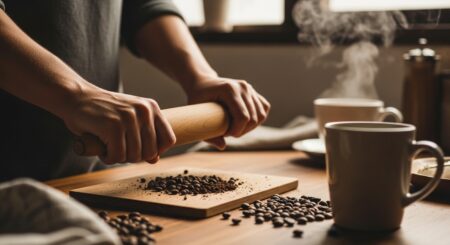
You’re standing there with whole beans in your hand, wondering how to grind coffee without a coffee grinder, and yeah… it feels a bit ridiculous, doesn’t it, like owning a bike with no wheels. You probably just wanted a cup, not a whole survival scenario. But hey, this actually happens more often than people admit out loud.
The good news? You don’t need fancy gear. The slightly annoying news? You’ll need a bit of patience, and maybe a towel you don’t care about too much.
Let’s figure it out together, in a way that actually works and doesn’t make you regret buying whole beans in the first place.
Why You Might Need to Grind Coffee Without a Grinder
Sometimes you didn’t forget the grinder, life just… forgot you. Maybe it broke, maybe you’re traveling, maybe someone said “we have coffee” and didn’t specify it was in bean form like some kind of trick.
According to data from the National Coffee Association, about 66% of Americans drink coffee daily, and a surprising number prefer freshly ground beans. Which is great until you realize fresh beans are useless without grinding.
And honestly, pre-ground coffee loses flavor faster than you’d think. Within minutes, aromatic compounds start escaping. That smell you love? It’s basically flavor leaving the building.
So yeah, grinding matters. Even if you’re doing it in a slightly chaotic way.
What You’re Trying to Achieve (Even If It Feels Messy)
Before jumping into methods, it helps (just a bit) to know what “good grinding” even means.
You’re aiming for:
- Consistency (similar-sized particles)
- Correct coarseness depending on brew method
- Minimal heat (too much friction ruins flavor, kinda quietly)
Here’s a quick cheat sheet:
| Brew Method | Grind Size |
|---|---|
| French Press | Coarse |
| Drip Coffee | Medium |
| Espresso | Fine |
| Cold Brew | Extra Coarse |
Now, without a grinder, you won’t get perfection. You’re just trying to get “good enough that it tastes like coffee, not regret.”
Method 1: The Blender (Fast, But a Bit Wild)
If you’ve got a blender, you’re already halfway there. It’s not elegant, but it works.
How to Do It
- Add a small amount of beans (don’t overload it)
- Use short pulses, not continuous blending
- Shake the blender slightly between pulses to redistribute
You’re basically tricking the blender into acting like a burr grinder, except… it isn’t.
What Happens (Realistically)
You’ll get uneven grounds. Some fine, some chunky. It’s like a coffee identity crisis. But for drip coffee? Totally usable.
Pro Tip
If your blender has a “grind” setting, use it. If not, pretend it does and pulse like you mean it.
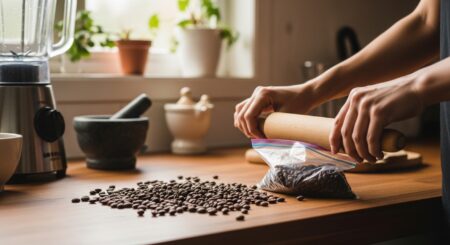
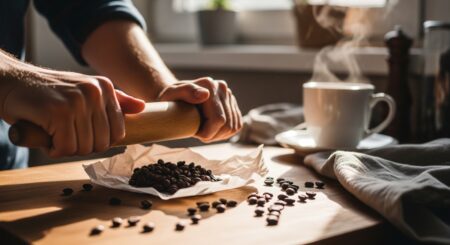
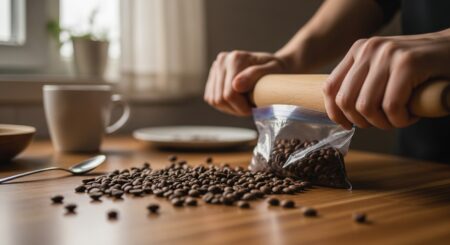
Method 2: The Rolling Pin (Surprisingly Satisfying)
This one feels oddly therapeutic, like you’re baking but slightly angrier.
What You Need
- Rolling pin (or wine bottle, let’s be honest)
- Ziplock bag or parchment paper
- Flat surface
Steps
- Put beans in the bag
- Press down gently first (crack them)
- Roll over them until desired consistency
Why It Works
You’re applying pressure evenly, which actually gives better control than some electric methods.
Downsides
- Takes time
- Can be inconsistent
- Might wake someone up if you get too enthusiastic
Still, this is one of the best answers to how to grind coffee beans without a grinder if you care about control.
Method 3: Mortar and Pestle (Old School, But Legit)
This method goes way back. Like, centuries back. People were grinding stuff long before electricity showed up.
How It Feels
Slow. Intentional. Slightly dramatic.
Steps
- Add a small amount of beans
- Use the pestle to crush in circular motions
- Gradually refine the grind
Why It’s Actually Good
You get excellent control over grind size, especially for finer grounds like espresso.
A Small Reality Check
Your arm might get tired. Not joking. This is a workout disguised as coffee prep.
Method 4: Hammer Time (Yes, Really)
Okay, this one sounds chaotic, because it is. But it works.
What You Need
- Hammer (or heavy object)
- Thick towel
- Hard surface
Steps
- Wrap beans in towel
- Smash gently (keyword: gently… kinda)
- Check consistency often
The Experience
It’s loud. It’s messy. It’s effective.
Also, there’s something weirdly satisfying about it. Like solving a problem with force, but responsibly.
Warning
Don’t go full Thor on it. You’re crushing beans, not proving a point.
Method 5: Knife (Careful Now)
This one feels a bit sketchy, but in a controlled way it works.
Steps
- Place beans on a cutting board
- Use the flat side of a chef’s knife
- Press down firmly to crack beans
- Chop to refine
What You’ll Get
Rough, uneven grounds. Best for French press or cold brew.
Important Note
Keep your fingers out of the equation. Coffee isn’t worth stitches.
Grinding Coffee Beans Without a Grinder: Which Method is Best?
Honestly? It depends on what you have and how patient you’re feeling.
Here’s a quick breakdown:
- Best for speed: Blender
- Best for control: Mortar and pestle
- Best for convenience: Rolling pin
- Best for stress relief: Hammer
- Best for “I have nothing else”: Knife
None of them are perfect. But all of them are better than staring at whole beans and sighing.
Real Talk: Does It Affect Taste?
Yeah… it does. But maybe not as much as you’re imagining.
According to coffee research from organizations like the Specialty Coffee Association, grind consistency plays a major role in extraction. Uneven grounds can lead to:
- Over-extraction (bitter taste)
- Under-extraction (sour taste)
But here’s the thing people don’t always say: your brain adjusts. If you’re just trying to get through your morning, slightly uneven coffee is still… coffee.
And sometimes that’s enough.
Tips to Make It Less Painful (And More Drinkable)
You don’t have to suffer through bad coffee just because you’re improvising.
1. Grind in Small Batches
Trying to do too much at once makes everything worse. Smaller amounts = better control.
2. Sift If You Can
If you have a sieve, separate finer and coarser particles. It helps more than you’d think.
3. Adjust Brew Time
- Too bitter? Brew shorter
- Too weak? Brew longer
You’re basically compensating for inconsistency.
4. Use the Right Method for Your Grind
Don’t force fine grind methods like espresso if your grind is chunky. Work with what you’ve got.
A Slightly Weird but Useful Perspective
Grinding coffee without a grinder is kind of like cooking without measuring cups. It’s messy, imperfect, and oddly personal. You start paying attention in a different way.
You notice texture. Sound. Resistance. Things you’d normally ignore.
And yeah, maybe your coffee isn’t café-level perfect, but it’s yours. Which sounds cheesy, but also… true.
Common Mistakes People Make (You Probably Will Too)
Let’s just save you some frustration.
- Over-blending: Turns coffee into powder and ruins flavor
- Not checking consistency: You gotta look, not just guess
- Using too much force too fast: Leads to uneven chunks
- Ignoring brew method: Grind size matters more than you think
You’ll mess up at least one of these. That’s fine. Everyone does.
When You Should Just Get a Grinder
At some point, the effort outweighs the charm.
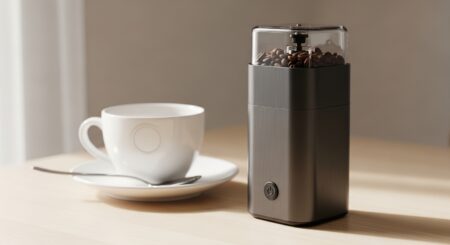
If you’re grinding coffee like this more than a few times a week, just… get a grinder. Even a basic burr grinder makes a noticeable difference.
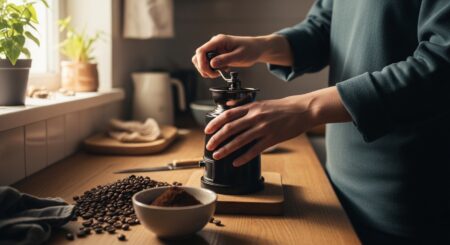
Manual grinders are affordable, portable, and honestly kind of satisfying to use. Less chaos, more control.
Final Thoughts (A Bit Honest, Maybe)
Figuring out how to grind coffee without a coffee grinder isn’t really about perfection. It’s about not letting a small inconvenience ruin your whole morning.
You improvise. You adapt. You make slightly questionable decisions with a rolling pin or a hammer.
And then you drink the coffee anyway.
And somehow, it still works.