

You’ve probably heard someone casually drop “burr coffee grinder” into a conversation like it’s some kind of secret club, and you’re just standing there thinking… wait, is my regular grinder not good enough or something? Yeah, that moment. That slight doubt. That curiosity that kinda lingers longer than it should.
Let’s just untangle this properly, but not in that stiff, textbook-y way. More like how someone would explain it to you over coffee, slightly distracted, maybe forgetting a word here and there.
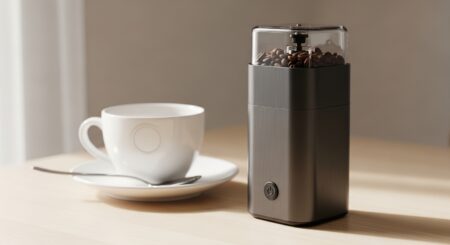
So… what is a burr coffee grinder, really?
A burr coffee grinder isn’t fancy because of branding or marketing fluff. It’s just built differently, and that difference matters more than you’d expect.
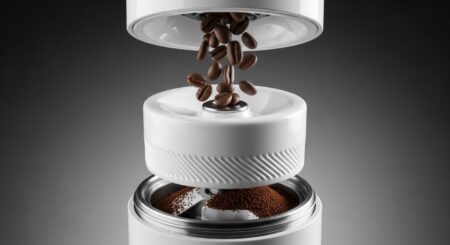
Instead of chopping coffee beans randomly (like those loud blade grinders do), a burr grinder crushes them between two surfaces — called burrs. Sounds aggressive, but it’s actually more controlled. More… precise, I guess.
There are usually two burrs:
- One stays still
- One rotates and does the grinding thing
And the space between them determines how coarse or fine your coffee ends up.
That’s it. Simple idea. But the impact? Not simple at all.
Why people switch to burr grinders and suddenly won’t stop talking about it
Okay so here’s where it gets a bit personal, because if you’ve ever had coffee that tasted kinda… off, even though you used good beans, there’s a good chance your grinder was the culprit.
Blade grinders:
- Chop beans unevenly
- Create both powder and chunky bits in one go
- Heat up the coffee (which messes with flavor)
Burr grinders:
- Produce consistent grind sizes
- Don’t overheat the beans as much
- Let you actually control how your coffee tastes
And yeah, once someone notices the difference, they go a bit annoying about it. Not their fault tho.
“Uniform grind size is one of the most critical factors in brewing quality coffee.” — Specialty Coffee Association
That quote gets thrown around a lot, but it’s true. Consistency is kinda everything here.
The two main types of burr coffee grinders
Not all burr grinders are the same, which is where things get a bit… unnecessarily complicated. But we’ll keep it human.
1. Flat burr grinders
These use two flat, parallel burrs facing each other.
What they’re like:
- Super consistent grind
- Often used in cafes
- A bit more expensive
- Can heat up slightly more than conical ones
People say they produce “cleaner” flavor. Honestly, unless you’re deep into coffee, you might not notice right away, but it’s there.
2. Conical burr grinders
These have a cone-shaped burr inside a ring-shaped burr. Sounds weird, works great.
Why people like them:
- Quieter (usually)
- Less heat buildup
- More forgiving with grind settings
- Often cheaper than flat burr models
Most home users end up here, and for good reason. It’s just easier to live with.
Burr grinder vs blade grinder (the real difference, no fluff)
Let’s not pretend this is a fair fight.
| Feature | Burr Coffee Grinder | Blade Grinder |
|---|---|---|
| Grind consistency | Even, predictable | Random chaos |
| Flavor quality | Clear, balanced | Muddy, uneven |
| Control | Adjustable settings | Basically none |
| Heat | Minimal | Can overheat beans |
| Price | Higher | Cheap |
If you’ve been using a blade grinder and thinking “coffee is just okay,” this is probably why. Not your fault, just… wrong tool.
Why grind size even matters (more than you’d expect)
This part trips people up. You’d think coffee is coffee, right? Grind it, brew it, done. But nope, the size of the grind changes everything.
Different brewing methods need different grind sizes:
- French press → coarse grind
- Drip coffee → medium grind
- Espresso → very fine grind
If the grind is wrong:
- Too fine → bitter, over-extracted
- Too coarse → weak, sour-ish
And blade grinders? They give you all sizes at once. Which explains that weird taste you couldn’t quite describe.
Electric vs manual burr grinders
This one’s less about quality and more about lifestyle, honestly.
Electric burr grinders
Pros:
- Fast
- Convenient
- Consistent every time
Cons:
- More expensive
- Takes up space
- Makes noise (some more than others)
Brands like Baratza and Breville are pretty well-known here.
Manual burr grinders
Pros:
- Portable
- Quiet
- Cheaper
Cons:
- Takes effort
- Slower
- Can get annoying if you’re half asleep
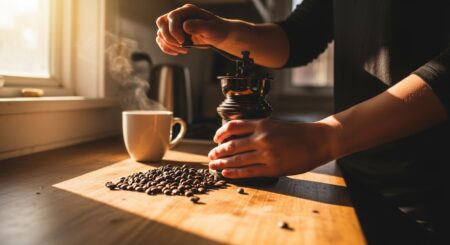
Some people love the ritual of hand grinding. Others try it once and go “yeah… no.”
How a burr coffee grinder actually improves your coffee (real talk)
This is where it clicks for most people.
When your grind is consistent:
- Water flows evenly through the coffee
- Extraction is balanced
- Flavors are clearer
You start noticing things like:
- Chocolate notes
- Fruity hints
- That slight nuttiness you never caught before
It’s not magic. It’s just physics doing its thing properly for once.
According to industry estimates, uneven grinding can cause up to 30% inconsistency in extraction. That’s not a small difference, that’s like… almost a third of your cup being off.
Things to look for when buying a burr coffee grinder
This part can get overwhelming real quick, so let’s keep it grounded.
1. Grind settings
More settings = more control.
You don’t need 50 options, but having flexibility helps.
2. Burr material
- Stainless steel → durable, common
- Ceramic → stays sharp longer, but can chip
3. Hopper size
That’s just the bean container. Bigger isn’t always better unless you’re making coffee for a whole crowd daily.
4. Build quality
If it feels flimsy, it probably is. And grinders take a bit of beating over time.
5. Price (yeah, it matters)
Good burr grinders usually start around:
- $80–$100 for decent entry-level
- $150–$300 for solid mid-range
- $400+ for enthusiast-level
You don’t need the top tier unless you’re really into it.
Common mistakes people make with burr grinders
Even with a good grinder, things can still go… slightly wrong.
- Not cleaning it regularly
- Using old coffee beans (this is huge, honestly)
- Ignoring grind size adjustments
- Storing beans in the hopper for too long
A burr grinder helps, but it doesn’t fix everything. Coffee still has its moods.
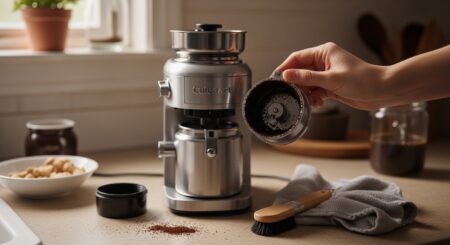
Cleaning and maintenance (don’t skip this part)
Yeah, I know, not the fun bit. But if you ignore it, your coffee will slowly start tasting… stale. Kinda weird, slightly off.
Basic cleaning tips:
- Brush out leftover grounds weekly
- Deep clean monthly
- Don’t use water unless the manual says it’s okay
Some grinders let you remove the burrs easily, which makes life simpler. Others… not so much.
Is a burr coffee grinder worth it for you?
Let’s be honest for a second.
If you:
- Drink coffee occasionally
- Don’t care much about subtle flavor differences
- Just want caffeine quickly
Then maybe, honestly, you don’t need one.
But if you:
- Care about taste
- Buy decent coffee beans
- Feel like your coffee could be better but don’t know why
Then yeah, this is probably the missing piece.
It’s one of those upgrades that feels small at first, then suddenly you can’t go back.
Final thoughts (the slightly messy kind)
A burr coffee grinder isn’t some elite coffee snob thing, even though it kinda gets treated like that. It’s just a better way to grind beans, more consistent, more controlled, less chaotic.
And once you notice the difference, it’s hard to un-notice it. Like switching from blurry glasses to clear ones, you didn’t realize how off things were until they weren’t.
If you’ve been frustrated with your coffee but couldn’t quite explain why, there’s a decent chance this is it. Not guaranteed, but… yeah, pretty likely.
And if you do end up getting one, just give yourself a few tries to dial things in. First cup might be weird. Second one too. Then suddenly it clicks, and you’re that person explaining burr grinders to someone else, slightly rambling, probably making the same small mistakes in sentences like I just did here.